Table of Contents
- The Korean clinic treatments we're curious about
- At-home K-beauty picks, matched to the clinic version
- The Korean skincare routine in 5 steps
- Korean skincare routine for women over 40: what to tweak
- How to match the routine to your skin type
- How long a Korean skincare routine really takes
- The step everyone skips: sunscreen
- Korean skincare routine mistakes to avoid
- Sources
- FAQs
Korean beauty is blowing up. It's everywhere. Justin and Hailey Bieber just got back from four days in Seoul, and Hailey's trip photos included a selfie in a blue sheet mask[1]. Labubu, from China's Pop Mart, went global after Blackpink's Lisa posted one. Now it's Korean sheet masks and collagen jelly sticks all over TikTok, and everyone wants a Korean skincare routine.
And there's a reason. Korea shipped a record $11.4 billion in cosmetics in 2025, and the US became its number one buyer for the first time[2]. Their skincare is some of the best in the world, and I'm willing to bet you already own a bottle of it.
People fly across the globe for Seoul's clinics. Over 2 million foreign patients went to Korea for care in 2025, and about 63% of those visits were dermatology[3]. We plan to do this in the next year too (stay tuned). BUT, in the meantime, here are the treatments we're eyeing.
Longevity Coffee+
$68.00
Premium, Organic Medium Blend Instant Coffee that is infused with NAD+ precursors, collagen and antioxidants.… read more

The Korean clinic treatments we're curious about
None of these are things we've tried yet, and this isn't medical advice. Just our shortlist for the trip, with the price one Seoul clinic guide lists per session[4].
- Rejuran skin booster. The "salmon DNA" one. Korean dermatologists told Visit Korea skin boosters are the most popular procedure right now, and Rejuran uses PN (polynucleotide) from salmon DNA[5]. Roughly $200 to $370 a session, done by a doctor.
- Aqua peel. Cleanse, gentle exfoliation and a serum infusion in one visit. Listed around $20 to $135 depending on the clinic, with no downtime.
- Glass skin facial. Less a single treatment, more a clinic menu: an aqua peel, a booster or mask, then LED. The goal is the dewy, even look the whole trend is named after.
- LED therapy. Light panels, usually added to the end of other treatments. Listed around $50 to $110 standalone, and clinics usually suggest a series.
Some of these show up in US med spas, but the menus, prices and booster brands aren't the same. And since most of the Seoul versions aren't easy to get in America, here are some products we've been loving that you can get at home, close enough to the real thing for a fraction of the price.
At-home K-beauty picks, matched to the clinic version
Each pick below borrows one idea from a clinic treatment. Budget picks first, then a couple of splurges. Prices are what we found at major US retailers in November 2026[6].
| Clinic treatment | Typical Seoul price | At-home pick | Approx. price |
|---|---|---|---|
| Rejuran / PDRN booster | $200-370 a session | Medicube PDRN Pink Peptide Serum | $18-26 |
| Aqua peel hydration | $20-135 | COSRX Advanced Snail 96 Mucin Power Essence | $17-25 |
| Glass skin facial | Varies by clinic | I'm From Rice Toner | $12-28 |
| Daily protection after any treatment | n/a | Beauty of Joseon Relief Sun SPF 50+ | $14-18 |
| Splurge: the full facial feel | Varies by clinic | Sulwhasoo First Care Activating Serum (60ml) | $89 |
| Splurge: LED and device add-ons | $50-110 | Medicube AGE-R Booster Pro | $210-230 |
| Inside-out step (collagen) | n/a | Vivi Longevity Coffee+ (2.5g collagen plus a 330mg NAD+ precursor blend) | See product page |
My take: start any Korean skincare routine with the sunscreen and the snail essence. That's under $45 for the two products I'd buy even if I bought nothing else. The Booster Pro is fun, but it's a $200+ gadget, so buy it after the basics stick.
The last row is ours, and it's the step K-beauty calls "inner beauty". In one trial, women aged 35 to 55 who took 2.5g of a specific collagen daily had better skin elasticity after 8 weeks than placebo[7]. That trial tested one product, so I treat collagen as a daily habit, not a miracle. I break down the rest in what collagen does and what the research says.
So my morning looks like this. Kettle on, cleanse and toner while it heats, snail essence, moisturizer. Then one stick of Longevity Coffee+ in hot water with a splash of milk, made to support healthy aging[8]. Sunscreen goes on last, before I head out to surf. Skincare bottles sit in a drawer when life gets busy. Coffee never does.
The Korean skincare routine in 5 steps
Now the routine those picks plug into. Here's the whole Korean skincare routine on one table. Thinnest texture first, thickest last, sunscreen on top in the morning.
| Step | Morning | Night | Why it's there |
|---|---|---|---|
| 1. Cleanse | Gentle cleanser, or just water | Oil cleanser, then a gentle cleanser | The "double cleanse" melts off sunscreen and makeup without stripping |
| 2. Toner or essence | Yes | Yes | A light first layer of hydration |
| 3. Serum | Something hydrating | The one you care about most | Targets your main goal |
| 4. Moisturizer | Light lotion or gel | Richer cream | Seals the layers in |
| 5. Sunscreen | Every day, even when it's cloudy | Skip | The step that matters most |
Sheet masks, the Hailey Bieber kind, are a once or twice a week extra on top of a Korean skincare routine. So are sleeping masks and gentle exfoliants.
Korean skincare routine for women over 40: what to tweak
Same five steps. You just shift the weight a little.
- Hydrate in layers. Two thin layers of toner or essence often feel better than one heavy cream.
- Go richer at night. Skin can feel drier with time, so a thicker night cream earns its spot.
- Exfoliate less than you think. Once or twice a week, gently. Red and tight means back off.
- Add strong actives slowly. If you want retinoids or acids, add one at a time and ask a dermatologist what fits your skin.
- Never skip sunscreen. It's the one step every clinic in Seoul will tell you to keep after a treatment.
And don't forget your neck and the backs of your hands. They get the same sun as your face and almost none of the attention.
How to match the routine to your skin type
The order never changes. The textures do. Here's a quick cheat sheet for picking products without buying the whole aisle.
| Skin type | Cleanser | Hydration layer | Moisturizer | Sunscreen feel |
|---|---|---|---|---|
| Dry | Cream or milky cleanser | Two layers of essence | Rich cream, especially at night | Moisturizing, dewy finish |
| Oily | Gel cleanser | One light toner | Gel or light lotion | Matte or fluid |
| Combination | Gentle gel | Light toner everywhere | Lotion, a little extra on dry spots | Light fluid |
| Sensitive | Fragrance-free, low foam | Short ingredient list | Simple, fragrance-free cream | Mineral formulas are worth a try |
Not sure which you are? Wash with a gentle cleanser, wait an hour, and look. Tight all over means dry. Shiny all over means oily. Shiny in the middle and tight on the cheeks means combination. Stinging with most products means sensitive.
When you try something new, test it on a small spot along your jaw for a few days first. It's a dull step, and it saves you from a week of angry skin.
How long a Korean skincare routine really takes
People skip a Korean skincare routine because they think it takes forever. A basic morning version takes a few minutes, about as long as a kettle takes to boil. Night is a little longer because of the double cleanse. If that sounds like too much, start with three steps: cleanse, moisturize, sunscreen. Add the rest when the habit sticks.
The step everyone skips: sunscreen
The American Academy of Dermatology recommends a broad-spectrum, water-resistant sunscreen with SPF 30 or higher, reapplied about every two hours when you're outside[9].
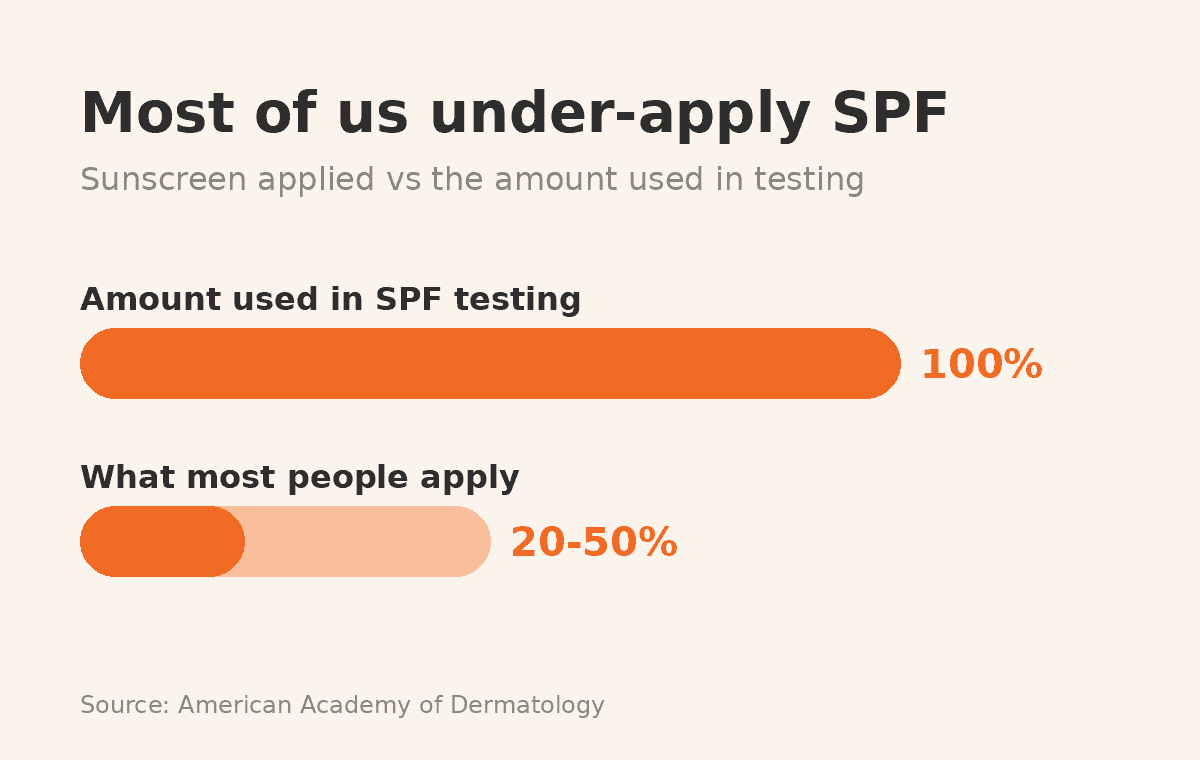
The same AAD page has a stat that changed my habits: most people put on only a fraction of the amount used in SPF testing[9]. So the number on the bottle is a best case, and I go generous.
Korean sunscreens like the Beauty of Joseon one got famous because they feel like a light moisturizer, so people actually wear enough of them.
My rule after a surf: rinse, moisturize, sunscreen, hat. Boring. Works.
Korean skincare routine mistakes to avoid
- Buying ten products on day one. Start with cleanser, moisturizer and sunscreen. Add one thing a week so you know what your skin likes.
- Using too much product. Thin layers absorb. Thick globs sit there and pill.
- Rubbing instead of patting. Gentle is the whole philosophy.
- Treating sunscreen as optional in winter. Cloudy days still count.
- Quitting after two weeks. Skin changes slowly. Give a routine a couple of months.
If you're an iced person, it dissolves in cold water too, and I've got a list of Korean coffee drinks that taste like a Seoul café.
Ready to add the inside step to your Korean skincare routine? Try Longevity Coffee+ with code BLOG12 for 12% off your first order, or pick the monthly subscription on the same page so it just shows up.
-stefan
Want the next one? Join the Vivi list for recipes and science, no spam.
This is our take, not medical advice. You always forget your supplements. You never forget your coffee.
Sources
- Sports Chosun: Hailey Bieber shares Korea trip photos, Oct 27, 2026
- Yonhap: K-beauty exports hit all-time high in 2025
- Korea.net: International patients in 2025 set a record
- Jivaka Beauty: Korean facial treatments and prices
- Visit Korea: Korean dermatology clinics and skin boosters
- Retail prices: Ulta, Sephora, Olive Young US, Walmart and brand sites, Nov 2026
- Proksch et al., 2014, Skin Pharmacology and Physiology
- Longevity Coffee+ product page
- American Academy of Dermatology: Sunscreen FAQs
FAQs
What is Rejuran?
Rejuran is the "salmon DNA" skin booster, made with PN (polynucleotide) from salmon DNA, and Korean dermatologists told Visit Korea skin boosters are the most popular procedure right now [5]. It's done by a doctor, and one Seoul clinic guide lists it at roughly $200 to $370 a session [4]. We haven't tried it yet, but it's top of our list for the trip.
What are the best Korean skincare products to start with?
Start with Beauty of Joseon Relief Sun SPF 50+ and COSRX Advanced Snail 96 Mucin Power Essence. That's under $45 for the two products I'd buy even if I bought nothing else [6]. Add a serum like Medicube PDRN Pink Peptide Serum once the basics stick.
Is Beauty of Joseon sunscreen good?
It's one of the reasons Korean sunscreen got famous: it feels like a light moisturizer, so people actually wear enough of it. That matters, because most people put on only a fraction of the amount used in SPF testing [9]. It runs about $14 to $18 at major US retailers [6].
What is a good Korean skincare routine for over 40?
Same five steps, you just shift the weight. Hydrate in thin layers, go richer at night, exfoliate gently once or twice a week, and add strong actives one at a time with a dermatologist's input. And never skip sunscreen, including your neck and the backs of your hands.
What Korean skincare treatments do people get in Seoul?
Skin boosters like Rejuran, aqua peels, glass skin facials and LED therapy are the big ones. Over 2 million foreign patients went to Korea for care in 2025, and about 63% of those visits were dermatology [3]. This isn't medical advice, just our shortlist for the trip.
How does Longevity Coffee+ fit into a Korean skincare routine?
It's the inside-out step, the one K-beauty calls "inner beauty." Each stick has 2.5g of collagen plus a 330mg NAD+ precursor blend in coffee you'd drink anyway, made to support healthy aging [3]. Try it with code BLOG12 for 12% off your first order.
Is collagen coffee worth adding to my skincare routine?
In one trial, women aged 35 to 55 who took 2.5g of a specific collagen daily had better skin elasticity after 8 weeks than placebo [2]. That tested one product, so I treat collagen as a daily habit, not a miracle. Skincare bottles sit in a drawer when life gets busy, coffee never does, and BLOG12 takes 12% off your first order of Longevity Coffee+.